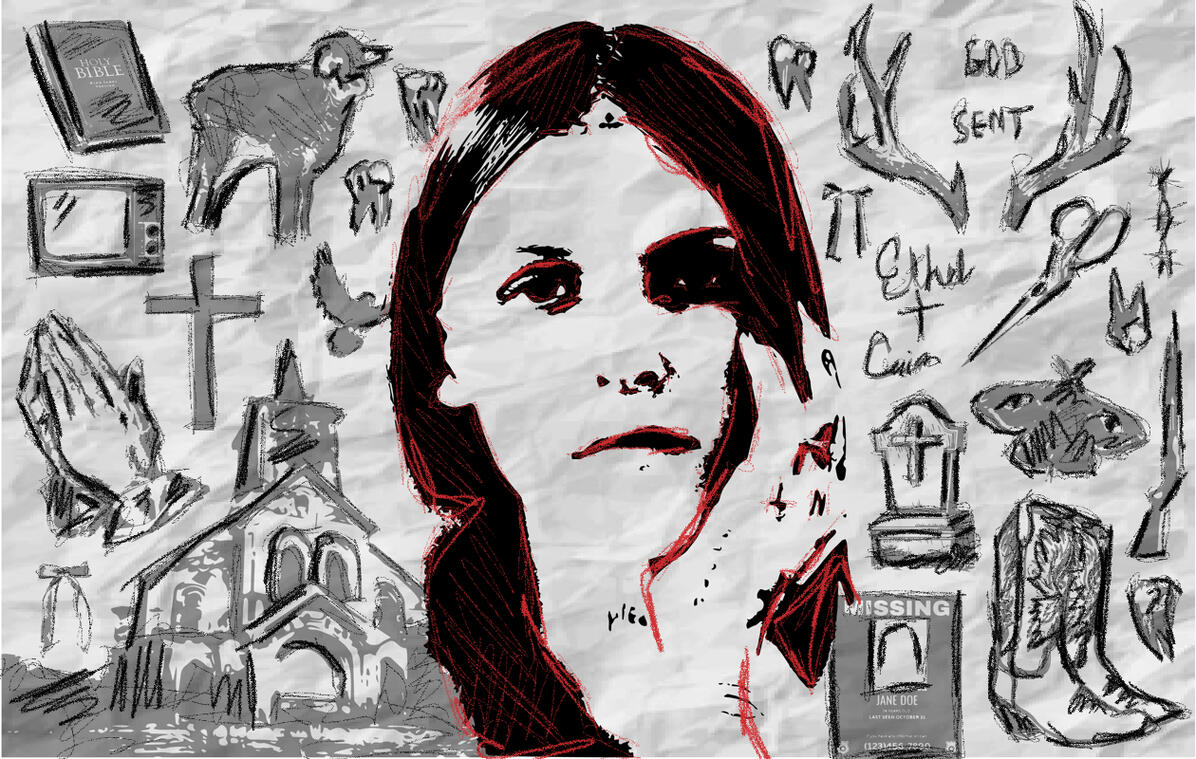
Art by: Natalie Waggoner
Southern Baptist Rituals in Ethel Cain’s Music:
An Examination of Queer Identity and Community
Anthropology 0009 Final Project
by Riley Rhines
Table of Contents
Introduction + Methodology
Southern Baptist Rituals and Religious Imagery
Queer Identity and Religious Trauma
Community Formation
Healing and Faith Reclamation
Conclusion
References
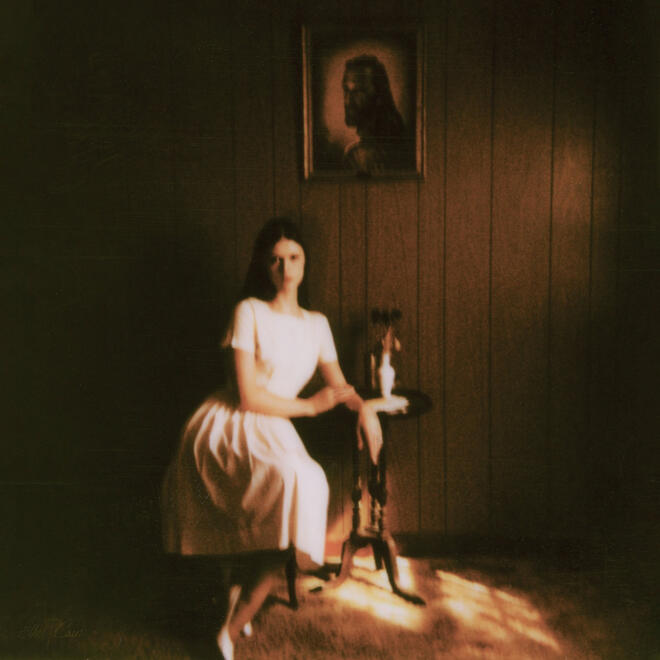
"Preacher's Daughter" album art
I. Introduction and Methodology
Research Question:
What impact does Ethel Cain’s deconstruction of Southern Baptist traditions have on her queer audience's perceptions of faith, identity, and community?
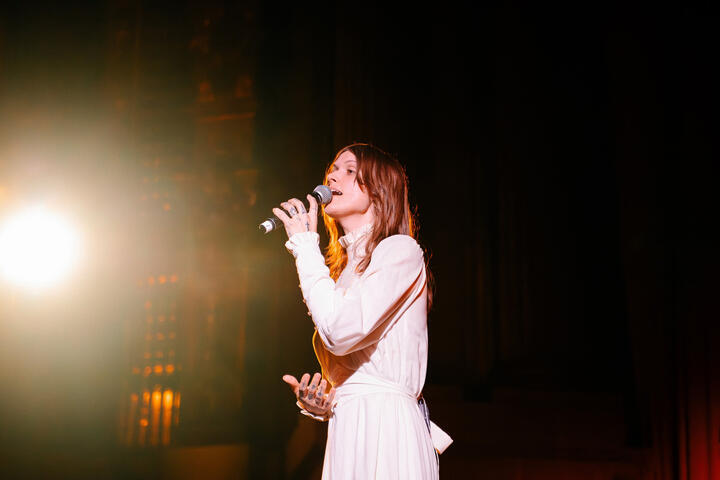
Ethel Cain @ Castro Theater - San Francisco, CA (Photo by Sabrina Poei)
Ethel Cain is the fictional musical persona of singer-songwriter Hayden Anhedönia. Being raised under the high-demand religion of the Southern Baptist Church in the panhandle of Florida, Anhedönia’s early life was marked by rigid structures and expectations from a community that was unaccepting of queer identity. After coming out as gay at the age of 12, and leaving the church at the age of 16, Hayden came out as transgender at the age of 20 [7]. Since then, Hayden has used the medium of music to help reconcile her queerness with her inescapable background of faith and maintained spirituality. These tensions are reflected in her music, combining Southern Gothic imagery with liturgical soundscapes to produce haunting narratives rich in references to Southern Baptist rituals and symbols.Hayden’s debut album, Preacher’s Daughter, presents the fictional narrative of Ethel Cain: a young woman trying to escape the suffocating ties of her family (with a father in a religious position of power both in the Church and over her life) and the Church. Coping through a long line of lovers, Ethel is tragically kidnapped, murdered, and even cannibalized; the album’s final songs are sung from the imagined pits of hell and, in turn, heaven. The album is densely layered with religious symbols, both directly and indirectly, and imagery, painting an image of emotional and spiritual trauma induced by rigid religious environments. Critiquing the traumas induced by her religion, Hayden attempts to distance herself from the organized tradition of her past while redefining and reclaiming a newfound sense of personal faith after it all (which is again reflected in the development of the narrative and the soundscape of the album: starting out hauntingly, then intense, and then soft and reflective).Ethel Cain’s music has resonated deeply with those who have experienced religious trauma and, most notably, queer listeners. Forming their own communities, her music has enabled the visibility and raising of marginalized voices while bringing to light the less mentioned intersectionality of queer identity and spirituality. The thesis of this project argues that Ethel Cain's music, through it's deep-cut and personal deconstructions of Southern Baptist traditions and religious trauma, fosters community for marginalized listeners and inspires support for a re-enchanting, re-worlding reclamation of faith.
Research Methodology:
My main form of firsthand, empirical research was conducted through an online survey (using Google Forms) that was shared across my personal socials as well as, most impactfully, the r/EthelCain subreddit community (Daughters of Cain) on Reddit, an online forum site. Over the course of a week, the form gained a total of 74 responses from fans across the globe (the accessbile format of an online survey leading to geographically inclusive data, covering 5 continents). Sharing basic, yet insightful, demographic information (such as gender, origin, and religious background) as well as long-form personalized responses (aiming to gain holistic perspectives) to questions inquiring religious experiences, interpretations of Ethel’s music, and thoughts on community impact and personal connections to her music. The responses were also nominally anonymous, encouraging honesty and inclusivity towards those who might need or prefer it. This data will be the main form of empirical analysis of communal impact within each section of this project.


In tandem with this data, secondhand data and influence was gathered through various anthropologically academic papers researching Southern culture [1], LGBTQ+ Christian experience [2], and queer theory with religious study [3]. In addition to this academic research, interviews with Hayden were gathered and used as insight for valuable contextual information regarding her own background and artistic intentions. Finally, each section will include contextual lyrical analysis of selections from Preacher's Daughter, treating her lyricism as a form of religious discourse.
II. Southern Baptist Rituals and Religious Imagery
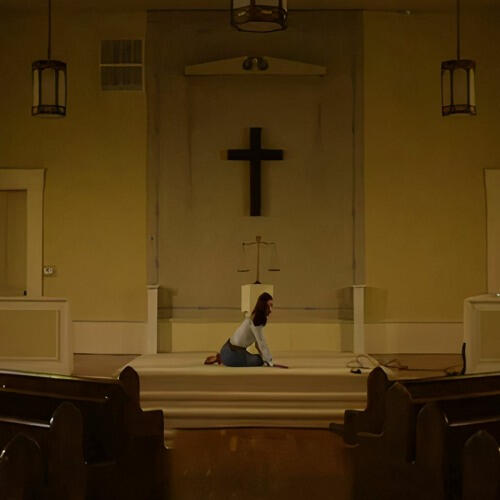
Ethel Cain, Live Performance of "A House In Nebraska"
"Sun Bleached Flies (Original Demo)" Art
Rituals and Symbols of the SBC
The notoriety of the Southern Baptist Church as one of the nation’s largest protestant Christian denominations reigned as the dominant religion of the Southern region with the rise of the Bible Belt in the 19th century [1]. Being a sect of general Baptism, the denomination recognizes two formal rituals: Communion and Baptism. Communion, in which bread and wine are consecrated as sacred objects (representing the body and blood of Jesus Christ), acts as a prescriptive unifying ritual, reinforcing the ideology of Christ’s earthly presence and our embodiment of such. Baptism, a rite of passage ritual, intends to cleanse the sin of the individual and enter them into the Church and with God, serving both purposes of purification and ideology. There is also prayer, which can be formal as in the proceedings of a service, or more informal and emergent, coming from an individual in a time of need or desire to connect with God. It is also worth mentioning that the religious denominations of the South are also made up of Methodists, Presbyterians, and Pentecostals; churches being united under both Southern culture and evangelicalism (a Christian belief structure that is very high-demand and scriptural) [1].There exist also pastors or “preachers,” who preach the word of God and His teachings to attendants of the service (although there is an interesting dichotomy between the “Prevailing View” and “Biblical View” of the role of the pastor in the SBC) [4]. In terms of symbols, the expected prevalence of the Christian cross and Christ imagery are present within the Church and its communities.
Lyrical Analysis (SBC Rituals & Symbols)
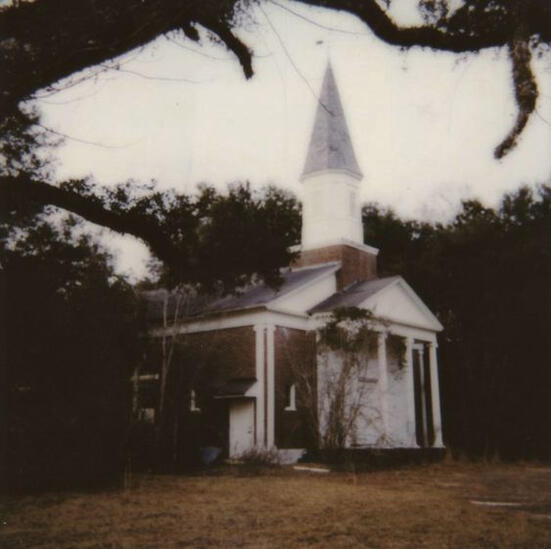
The influence of these religious symbols and rituals, along with the Southern culturual context from which they emmerge, is highly present throughout Ethel Cain's discography, particularly in the album Preacher's Daughter. Not only is her imagery rich with these visual symbols (see: the album art of Ethel sitting under the photo of Jesus, visualizers with Churches in fields, and the image of the cross highly frequent in her concert venues, photoshoots, and even tattoos), but we also hear auditory reference to these rituals throughout her music. These words, some even being actual recordings of pastors preaching, can serve as religious discourse to be analyzed (particularly in the reasoning behind her inclusions of these symbols and reference to these rituals). Below are some examples (although analysis in other sections will include high symbolism as well): [click and drag playhead for timestamp scrubbing]
A House In Nebraska: Praying straight to God that maybe you’ll come back around. // But god, I just hope you’re doing fine out there, I just pray that you’re alright.
(04:31 - 04:39, 05:16 - 05:23)
The concept of "prayer" is referenced in many songs (including its repetition as a tool of comfort in her later song, "Sun Bleached Flies"). Here, she references prayer and God in times of emotional desperation. Her wish to "pray" a healthy state of her estranged lover can be thought of not only as a form of psycho-social comfort, but also of divination of the unknown.
Family Tree (Intro): A woman, a mother, a mother is a very special thing and other than the Lord Jesus Christ, I think that a mother is one of the most precious gifts that God gives to this world because the mother is the one who loves the Lord and always seems to be there when we need her. A mother is a very special thing. A mother is a very special thing.
(00:10 - 00:36)
Strangers: God is telling you and I there is death, for all of us. / But then we find that the scriptures also tell us that we have a great promise, that there is a better place for those who believe in the lord Jesus Christ.
(00:14 - 00:35)
Here are two audio sound bytes of actual Southern pastors preaching. Interestingly, they appear at the start of the first and last tracks of the album (listed here, respectively). While the former establishes a haunting tone and themes on women and the family unit (particularly calling out the contradicting ideals of holding women high even though misogyny is rampant in the patriarchal SBC [1]), the latter accomponies brighter tones as a comforting promise of an afterlife (taking place after Ethel's death).
Strangers: Freezer bride, your sweet divine / You devour like smoked bovine hide.
(00:56 - 01:05)
In a grotesque and shocking turn by the latter tracks, Ethel is murdered and cannibalized by her lover (the event occurring in the Hell-themed song, "Ptolomaea"). Here, we see the cannibalism post-death directly referenced (specifically his "devouring" of her). This devouring can be referential to the ritual of Communion, as her lover literally embodies her (Ethel can also be seen as a "Christ-figure," as her sacrifice serves as a cautionary tale to those she leaves behind). Even though it is negative, this severe act of embodiment takes on the context of a divine act of love (with the lyrics here referring to her as a "bride" and "sweet divine").
Community Survey Data: Geographic, Religious Background, Response to Imagery
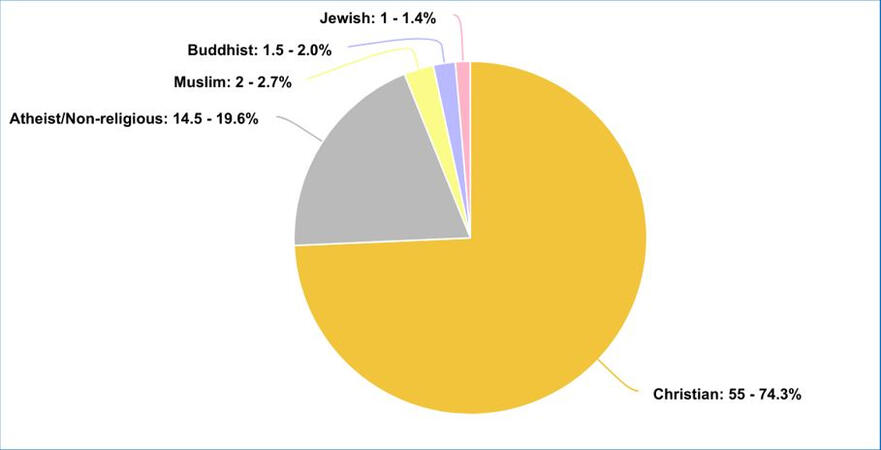
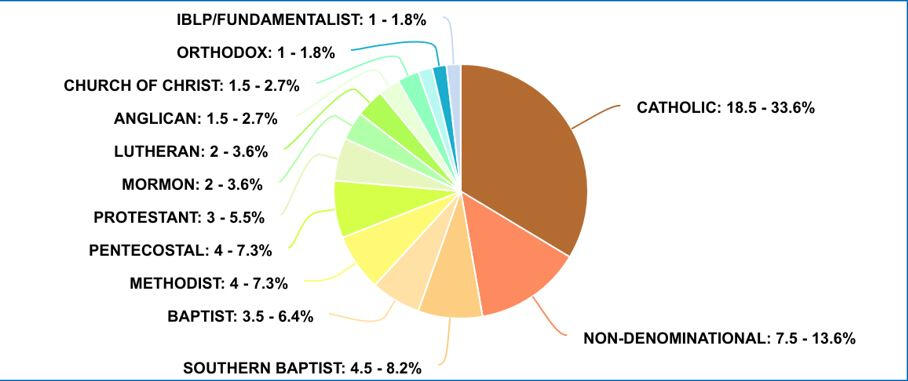
Showing a high degree of localized relatability, my survey of 74 Ethel Cain fans revealed interesting trends. First, for geographic background, South USA and (the similar in religious culture) Midwest USA were the highest categories at a combined 32.5% of the data. On religious backgrounds (how they were raised), Christian religions as a whole took the vast majority (followed then by secular) at 74.3%. When broken down to the denominations of the Christian upbringings, Catholic backgrounds took the highest percentage with 33.6%. I believe this points to a trend in fans from backgrounds of very traditional, high-demand demoniations such as Catholicism finding more relatability in the traumas associated with such rigid structures (more on this in Section III). Interestingly, the third highest denomination was Southern Baptist at 8.2% of the 55 Christian backgrounds. This demographic data reveals the highly localized resonance with fans of Ethel Cain, those who have pre-internalized connections with the culture of the region as well as the dominant religions of said regions.

Geographic Background/Location (74)
Major Religious Backgrounds (74)
Christian Background Denominations (55)


Here are some responses from interviewees when asked, "In your opinion, what purpose do Southern Baptist rituals and imagery serve in Ethel Cain's music?" In summary, there seems to be agreement trending towards Cain's use of religious imagery being both aesthetic and functional, reflecting her own background and connecting with others who can recognize those symbols in their own background, and adding authenticity and strength to the narrative.

-Response 50 (Central Florida, Gay/Lesbian Butch, Raised Southern Baptist, Spiritual/Universalist)

-Response 18 (Brazil, Bisexual Female, Catholic Background, Not Religious)

-Response 12 (Ontario, Lesbian Female, Raised Catholic, Spiritual)

-Response 20 (Sydney Australia, Bisexual Female, Raised Pentecostal, Spiritual)

-Response 41 (Rural Michigan, Gay Male, Raised Catholic/Lutheran, Spiritual)


[Response identities are listed with the following format: Location, Sexuality/Gender, Religious Background, Current Religious Standing ("Spiritual" is based off the response "I am still spiritual, but no longer identify with how I was raised or with a particular belief system")]